
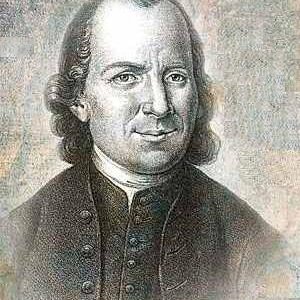
A building for storing food offers an unusually concrete way to begin a missionary’s story. For Christian David, building places where people could endure was part of the work itself.
A Building to Keep Food Safe
In 1749, Christian David took part in a journey to America connected with a need in Greenland: obtaining timber for food storehouses. According to the Moravian historian David Cranz, he had noticed that the food supplies of the people of New Herrnhut were being lost to animals or spoilage. The project was simple to describe and demanding to carry out. Materials had to be obtained on another continent, transported across the Atlantic, and made into buildings that would protect what people depended on for their survival.
The American congregation supplied timber and cedar shingles. In Greenland, the work produced a large storehouse for the Inuit and additional facilities for the missionaries. Cranz credited David with a decisive part in the undertaking. The carpenter who had helped establish a refuge in Saxony was still putting his trade at the service of distant communities. Timber crossed the ocean because a practical need had been recognized and people in different places had cooperated to meet it.
Food kept safe under a roof was no incidental detail in this history of mission. Cranz's pages show how much of the workers' attention went toward subsistence: finding provisions, building shelter, learning to live in their surroundings, and caring for people. Preaching had to take its place alongside these tasks. In David's life, a sermon and a building could belong to the same work of service. Both required attention to real people whose needs did not disappear when a religious meeting ended.
The Beginning of Herrnhut
In 1722, the refugees reached Zinzendorf's estate at Berthelsdorf. Among the earliest names preserved are Augustin and Jacob Neisser and members of their family. The undertaking began with people who had left Moravia and were seeking refuge. The place that would become Herrnhut still had to take shape as a settlement. A landowner's protection and the availability of land provided conditions for a beginning; community life would have to be built.
Heitz, the estate's administrator, took part in choosing and preparing the site. Hutton depicts him inspecting the ground and helping the newcomers while the count was away. This collaborator deserves to retain his place in the story. Although David and Zinzendorf are central names, establishing the refuge involved people who attended to practical arrangements and enabled the promise of shelter to become work.
David's felling of the first tree is dated June 17, 1722. The event became a point of reference in Herrnhut's memory. Before becoming a celebrated image, however, cutting that tree was part of the task of building. A carpenter was applying his trade to create a place where emigrants could settle. The significance of the episode arises from that connection: the search for religious freedom was beginning to take material form.
David remained connected with the routes of migration. New groups arrived, including members of the Nitschmann and Zeisberger families. Their continuing arrival enlarged the community and brought different histories into it. We should neither treat all these names as interchangeable nor attribute to one man the later work of people who would develop contributions of their own. David played an important part in connecting places and in the settlement's earliest labor.
A Journey That Reached Greenland
David's work extended beyond the connection between Moravia and Herrnhut. His missionary travels reached Livonia, the Netherlands, and Switzerland. But his departure for Greenland in 1733 confronted him with conditions especially different from those he had known. The carpenter joined a mission that would have to learn how to obtain food, communicate, and establish relationships in a land where people, knowledge, and histories already existed.
Cranz preserved Matthew Stach's recollection of the undertaking's beginnings. The historian stated that he had gathered Stach's narrative through conversation and written answers. According to Stach, Frederic Boehnisch had initially wished to accompany him, but was away on another journey when David decided to go. Since David's participation was understood to be temporary, Stach also chose his cousin Christian Stach. The three left Herrnhut in January 1733.
If you want to see how a trade became useful to communities under pressure, the Faith Ablaze app is a place to continue the reading. The member library brings together biographies and studies of mission, translation, and local churches that you can explore and revisit at your own pace. Explore the Faith Ablaze app.
This arrangement helps distinguish their roles. David brought experience and building skills to assist with the mission's beginnings. Stach remembered being instructed to respect his advice. At the same time, the expectation was that David would return after helping them establish themselves. The journey should not be turned, from its outset, into a promise to reside in the country for life. The planned service could be temporary and still matter greatly to those who would remain.
The instructions Stach recalled included cooperation with Hans Egede, who was already working in Greenland. They were to offer assistance and avoid interfering if he did not need them. Their initial approach was thus presented as an attempt to join efforts. Later relations would not be free of controversy, but it would be wrong to begin the story as though the newcomers were already destined to replace a worker who had preceded them.
Surviving, Learning, and Caring
The mission's early years were marked by difficulty in sustaining everyday life. According to Cranz, the newcomers had not mastered the fishing, hunting, and use of kayaks on which local people depended. A European trade could help someone put up a house without teaching him how to obtain food in that setting. The need to learn from others was part of their situation, however strong their religious confidence might be.
Their relationship with Egede also involved learning. He supplied written observations about the language, and his children helped them. This provided a beginning without making communication easy. It was more than a matter of finding equivalent words. To explain a religious conviction, they had to understand how to express it to people who had not lived within the missionaries' world of reference.
Cranz preserves episodes that prevent us from reducing the Inuit to people who merely received European assistance. On one occasion, local people returned a mission boat that a storm had carried away and damaged. On another journey, David and the boatmen found lodging among Inuit when they could not proceed. The missionaries needed shelter, resources, and cooperation. The history of their stay includes what they received from those they wanted to teach.
The smallpox epidemic of 1733 and 1734 made the beginning even more painful. Cranz describes the extent of the suffering and the work of Egede and the Moravians in receiving the sick. Some of his medical and religious interpretations belong to the thinking of his time; we need not adopt them to recognize what the account documents. People became ill and died, and mission workers sought to house and care for the sick under difficult conditions.
Timber, a Church, and Return Journeys
While his words remained in Wesley's record, Greenland continued to call for work. Cranz describes a new stage of building at New Herrnhut. The community's need for space was brought before a synod in 1746. People with means offered to pay for a large timber frame, prepared in the Netherlands under John Beck's direction and sent by ship. David took part in carrying out the project as master builder.
In Cranz's detailed sequence, the journey and the construction belong to 1747. The materials reached Greenland, and building progressed through the year despite the difficulties of weather and transport the historian describes. David returned to the place where he had helped the mission begin to work on a larger structure. This continuity was not a repetition of his first task: the community had new needs, and the carpenter contributed at another stage.
The new church was dedicated on October 16, 1747. Cranz identifies John Beck as the preacher on that occasion. He also records Jonathan, an Inuit Christian, participating in prayer. These names help keep the work in proportion. David bore responsibility for construction; that does not make him solely responsible for the religious life the building would accommodate. The church's history includes those who built, those who taught, and those who participated as members of that community.
Reading the evidence
The surviving record lets us see how a trade became useful to communities under pressure. Those details give the account its limits as well as its shape. They let a reader ask what the decisions meant for the people who had to live with them.
Go deeper into the questions raised by Christian David with books, study guides, and audio and video resources in the Faith Ablaze app. Your membership also helps our team share more stories that keep the people involved in a mission in view through free articles and YouTube documentaries. Become a member and help keep these stories available.
Selected sources
TheHistoryofGreenland,volII,London1767;exemplarCIHM33434.
DAVID Kristián 1692–1751. Biografický slovník českých zemí 12, Praha 2009, p.147; edição digital HIÚ.
History of the Moravian Church, Book Two, ChapterII: Christian David,1690–1722.
History of the Moravian Church, Book Two, ChapterIII: The Founding of Herrnhut,1722–1727.